Amherst is the only zip code in Massachusetts where water use drops in the summer. Planning Board member Jesse Mager made that point at the board's September 2, 2026 meeting, and it is the kind of fact that only makes sense once you know how much of the town empties out every May when the student population clears out of campus and the surrounding neighborhoods. It is also the fact that explains why a state law written to help homeowners add an in-law apartment is producing a different result here than it does almost anywhere else in Massachusetts.
That law is the Affordable Homes Act, and, as Amherst Indy reported, the piece of it that matters for Amherst buyers took effect when the town adopted a two-tiered accessory dwelling unit bylaw in November 2025. Under the new rules, an ADU of up to 900 square feet, what the bylaw calls a "protected" unit, can be built by right. The building commissioner approves it administratively. No hearing. No notice to the people next door. The only path that still requires an owner to actually live on the property is the larger "local" ADU option, which tops out at 1,200 square feet and comes with design standards the smaller units skip entirely.
In most towns, that trade-off is a reasonable bet. A homeowner gets a fast permit for a modest structure, in exchange for giving up the extra square footage of the owner-occupied option. In a town where UMass keeps just over 60 percent of its students in on-campus housing, and where a quasi-lottery system decides who gets to stay on campus after a student's first, guaranteed year, the overflow demand lands somewhere in Amherst's private rental stock. Mager's read on the board is blunter. As Amherst Indy reported, he told the board, "Our situation is that every single thing that will be built is just going to be student-occupied," and argued that Amherst is unique enough to warrant its own exemption from a law that was not written with a campus town in mind.
What "Protected" Actually Means for the House Next Door
| Protected ADU | Local ADU | |
|---|---|---|
| Max size | 900 sq ft | 1,200 sq ft |
| Owner-occupancy required | No | Yes, principal dwelling or ADU |
| Hearing or abutter notice | None, approved administratively | Design and dimensional standards apply |
| Deed restriction required | No | Yes, filed with Registry of Deeds |
For buyers, a seller's disclosure may not include plans for a nearby property. A May 2026 Amherst Indy report said plans already filed showed that at least nine of the recently permitted "protected" ADUs exceed the 900-square-foot cap.
Orchard Valley's Housing History
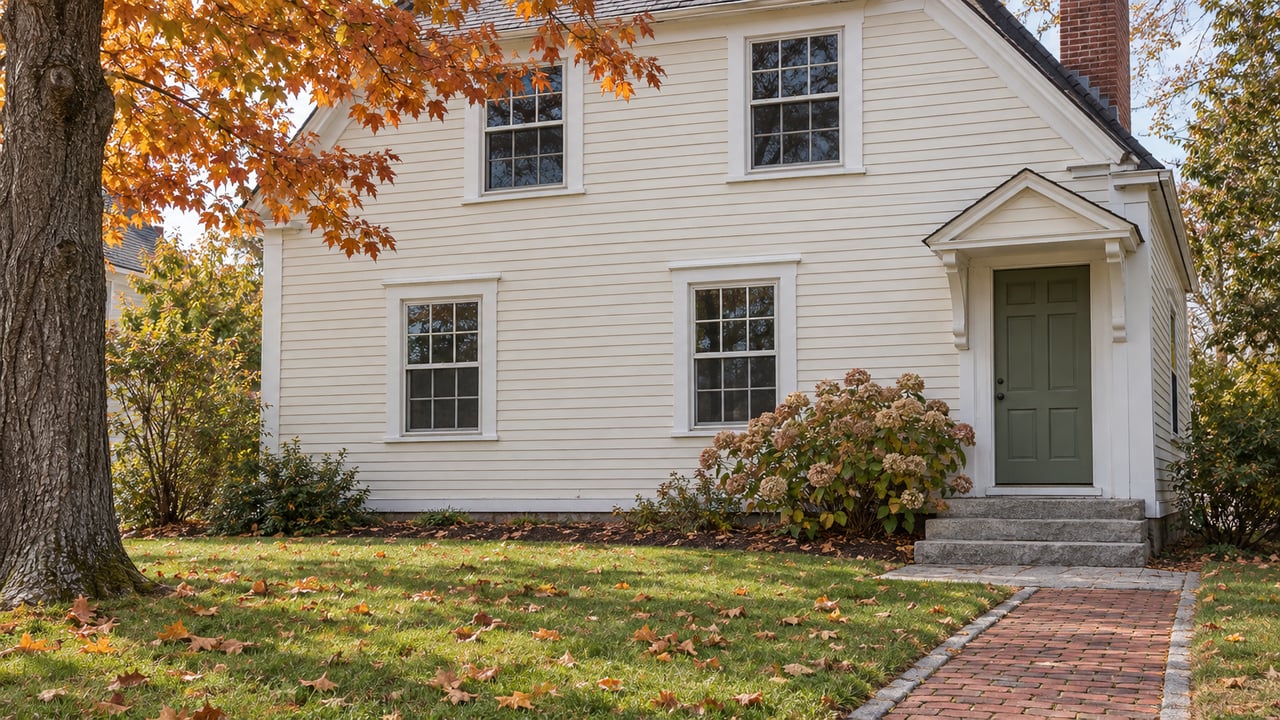
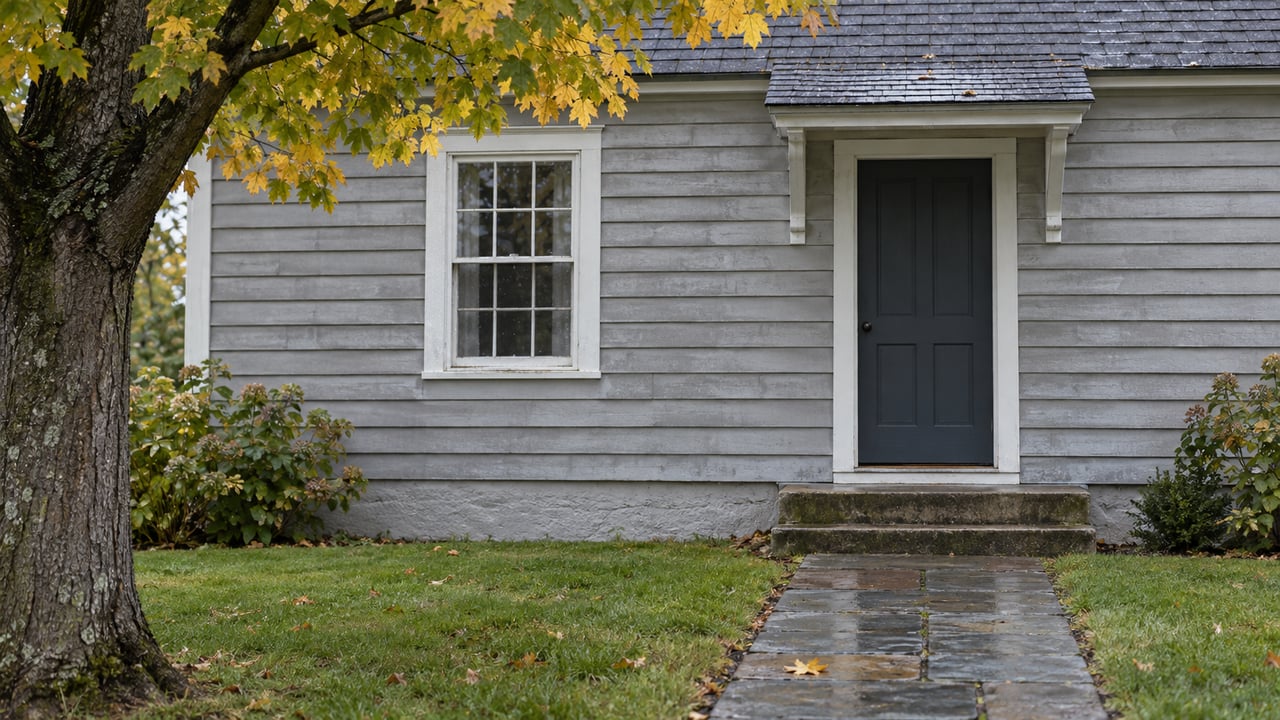
If you want to see what happens when this pressure lands on a specific place, look at Orchard Valley in South Amherst. According to Amherst Indy, Orchard Valley was developed in the 1960s and 70s through a federal Section 235 program, the one that used G.I. Bill-style financing to help buyers of modest means get into a house without a down payment. The builder, Kay-Vee, offered a handful of ranch and colonial models, most around 1,000 square feet. Longtime residents have called the cluster of streets there, Longmeadow Drive, Greenwich Road, Deepwoods Drive, "Municipality Row," because so many of the original buyers were town employees: police officers, firefighters, the kind of working households the 235 program was designed to reach.
Amherst's Housing Production Plan names Orchard Valley, alongside East Amherst, as neighborhoods with the lowest median home values in town and identifies them as areas targeted by LLC investors converting single-family houses into student rentals. A 2022 piece in the Amherst Current from a longtime Orchard Valley resident described absentee owners as able to outbid other buyers by accommodating more renters in the same small floor plan than a family might justify paying for. The neighborhood's affordability, which helped make it a starter-home area for fifty years, is also relevant to its appeal as a student-rental investment now.
The town's own numbers give this some shape. A citizen zoning petition filed with Amherst in 2025 cited the Housing Production Plan's count: roughly 5,200 single-family homes in town, 680 of them rented, and 137 of those rentals already owned by LLC investors specifically for student housing. That is about one in five rented single-family homes in Amherst already operating as an investor-owned student rental, concentrated in the neighborhoods the plan flags as cheapest to buy into.
None of this means Orchard Valley has become a rental block. A group of longtime women residents began meeting in 2025 to record their own oral history of the neighborhood, according to Amherst Indy, and several of the original 1960s buyers or their families are still there. The point is not that the neighborhood has flipped. The ADU rule adds another path for adding units in town, where the economics already favor conversion.
Owner-Occupancy Conditions and Compliance
If you assume an owner-occupancy condition on a special permit is self-enforcing, a case moving through Amherst's Zoning Board of Appeals this month is worth knowing about. A report by Amherst Indy describes a special permit from 2012 allowing a second unit in a single-family home on the condition that the owner live there as his principal residence. At a September 24, 2026 hearing, Inspection Services confirmed the owner now spends most of his time at a home in New York. His attorney is asking the ZBA to drop the owner-occupancy condition entirely, arguing his circumstances changed. The board continued the hearing to November 12 for a site visit rather than ruling on the spot.
The lesson for a buyer isn't about this one house. It's that the board has yet to decide whether the owner-occupancy condition will be removed. If you're buying a two-family or a house with an existing ADU, the deed conditions and the actual, current compliance status are two different questions, and only the town's building department can answer the second one.
The Bifurcated Market This Produces
You can see the split this creates in the closed sales themselves. In late August and early September 2026, a three-bedroom on Summer Street sold for $330,000 the same week a seven-bedroom, nine-bath house on Eveningstar Drive closed at $1,350,000. A four-bedroom on Rolling Ridge Road went for $650,000 while a smaller three-bedroom on Harris Street sold for $525,000. Across the three months ending in June 2026, Amherst's median sale price sat at $472,000, down from the same stretch a year earlier, even as price per square foot rose over the same window. A single median hides a market where a modest starter ranch and a large multi-bedroom house priced for group living are trading in the same zip code, sometimes the same week.
Before You Write an Offer in Amherst
A few questions are worth asking directly of the town's Building Department, not just the seller, before you get attached to a house here, particularly a smaller single-family in a neighborhood like Orchard Valley or East Amherst.
- Has the parcel, or any of the immediately adjoining parcels, filed for a "protected" ADU. Since no abutter notice is required, the only way to know is to ask.
- If the home you're buying already has a second unit, what special permit conditions are attached, and when was compliance last confirmed by Inspection Services.
- Whether the fall zoning bylaw revisions the Planning Board has been promised, aimed at tightening the 900-square-foot cap, have been adopted yet or are still pending.
None of this is a reason to avoid Amherst. It is a reason to ask sharper questions than the listing sheet answers, especially in the neighborhoods where the numbers say conversion pressure is highest.
A Couple of Things Buyers Ask
Does this apply everywhere in Amherst, or just near campus? The bylaw applies townwide. The Planning Board's September 2026 rezoning discussion focused on adding purpose-built student housing capacity along North Pleasant Street north of Fearing Street, the Phillips Street neighborhood, and East Pleasant Street between Strong Street and Village Park, partly as a response to the loss of the roughly 200-bed Olympia Place complex, which burned in November 2025. That is a separate, campus-adjacent conversation from the ADU rule, which applies to any single-family lot in town.
What is the status of proposed changes to size-cap enforcement? Planner Walker Powell told the board that staff-drafted revisions aimed at ensuring developers stay within the 900-square-foot cap are expected to come before the Planning Board this fall. As of this writing nothing has been adopted. If you're under contract on a house near a vacant lot or a large parcel, it's worth checking the status of that revision before closing.
Buying a starter home in a town built around a university means the rules around you can shift with a single state law and a local vote you never heard about. If you're weighing a house in Orchard Valley, East Amherst, or anywhere else in town where the ADU math might apply to your street, Ashton Realty Group can walk the specific parcel and its neighbors with you before you write an offer.
This article is general information, not legal, tax or financial advice. Consult a qualified professional about your situation.